Closed-loop irrigation can cut water use by up to 95%
Holistically designed BIA systems support sustainable goals, protecting our finite resources.
95%
reduction in water consumption
75%
of irrigation could be replaced through stormwater harvesting
Mechanism
By reusing water within a hydroponic system rather than drawing fresh water for each growing cycle, the Skeena Terrace mock case study models a water consumption reduction of up to 95% compared to conventional irrigation.
Consequence
Furthermore, stormwater harvesting at the site could replace up to 75% of the potable water used for irrigation. Combined, these two strategies could nearly eliminate the farming component's reliance on the municipal water supply.
Nuance
These are modeled projections, not measured outcomes. The indoor hydroponic component at Skeena Terrace is currently hypothetical. As such, these figures represent credible engineering targets rather than confirmed operational data.
Design Implication
Because these models are grounded in the constraints of a real, in-progress affordable housing development—rather than an isolated lab environment or an entirely different building typology—they offer a highly credible, practical baseline for similar residential-scale BIA projects to design toward, moving beyond theoretical best-case scenarios.
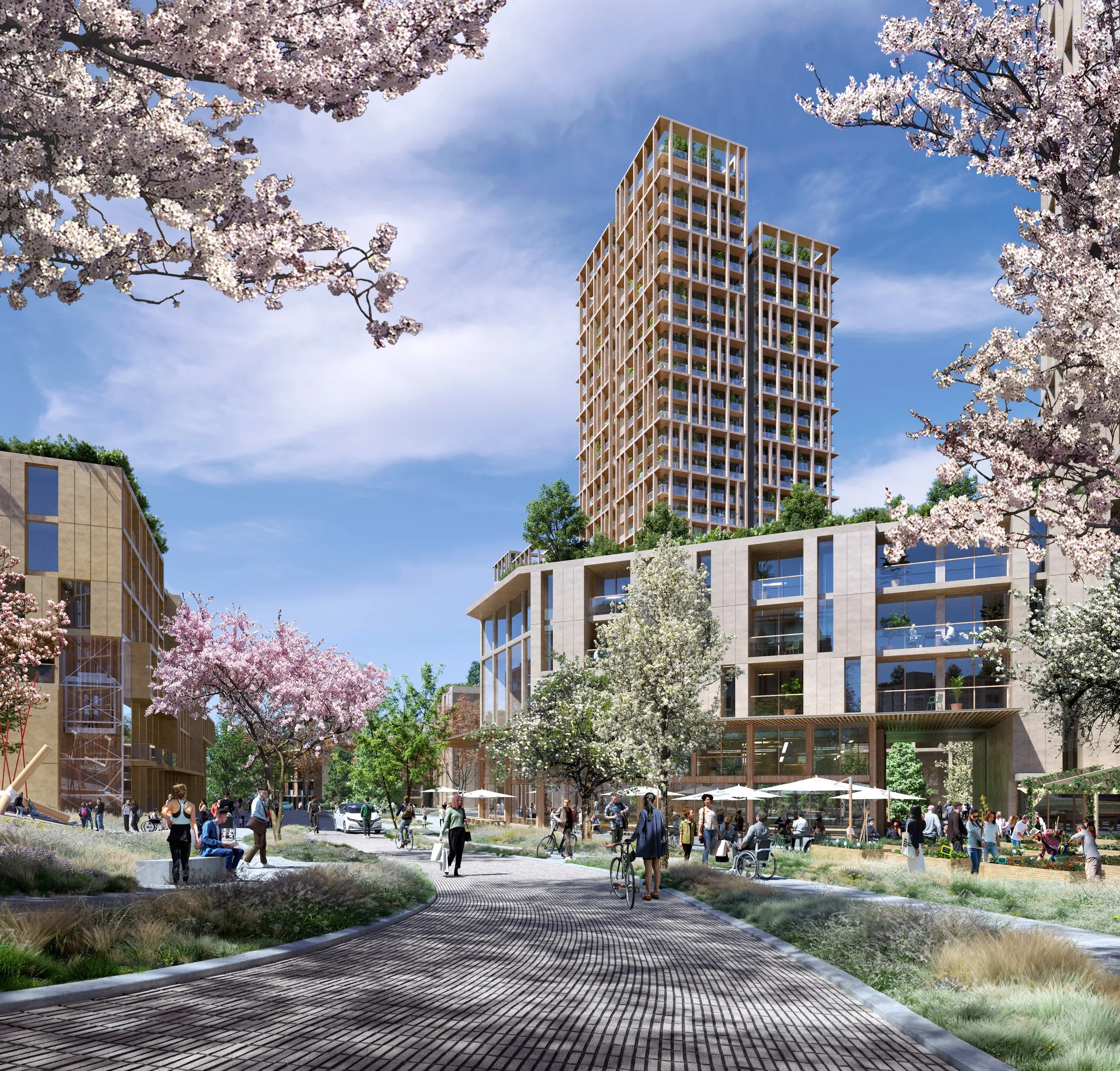
Perkins&Will, Skeena Terrace, Vancouver, BC. Urban farming integrated into the BC Housing project.