The BIA Growing-System Spectrum
Four core growing systems, soil-based, hydroponic, aquaponic, aeroponic, each trade off water use, energy demand, yield, and complexity differently, and none of them wins outright.
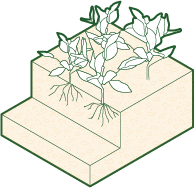
Soil-based systems are the lowest-tech and most exposed to weather variability, but they enhance biodiversity and support community building in a way controlled-environment systems don't.
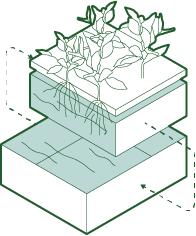
Hydroponic systems use up to 90% less water than soil-based growing but carry a higher energy demand to run pumps and climate control.
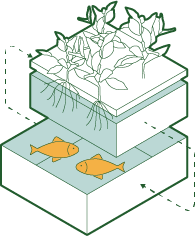
Aquaponic systems close the nutrient loop by cycling fish waste into plant nutrition and produce a dual output of vegetables and protein, but work best with a narrow set of crops, mostly leafy greens.
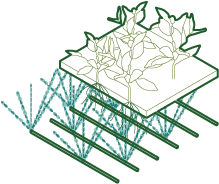
Aeroponic systems offer the most precise nutrient delivery and the best oxygen exposure for root uptake, at the highest initial cost and the greatest risk if the system fails.
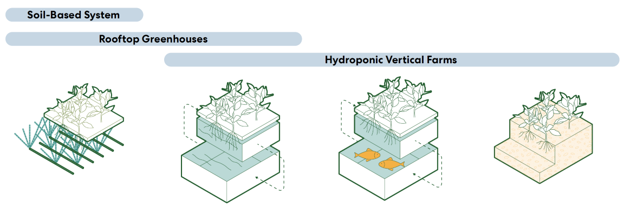
The report's point in laying these out side by side is that choosing a growing system is a genuine tradeoff decision, not a default, the "best" system depends entirely on what a project is optimizing for.
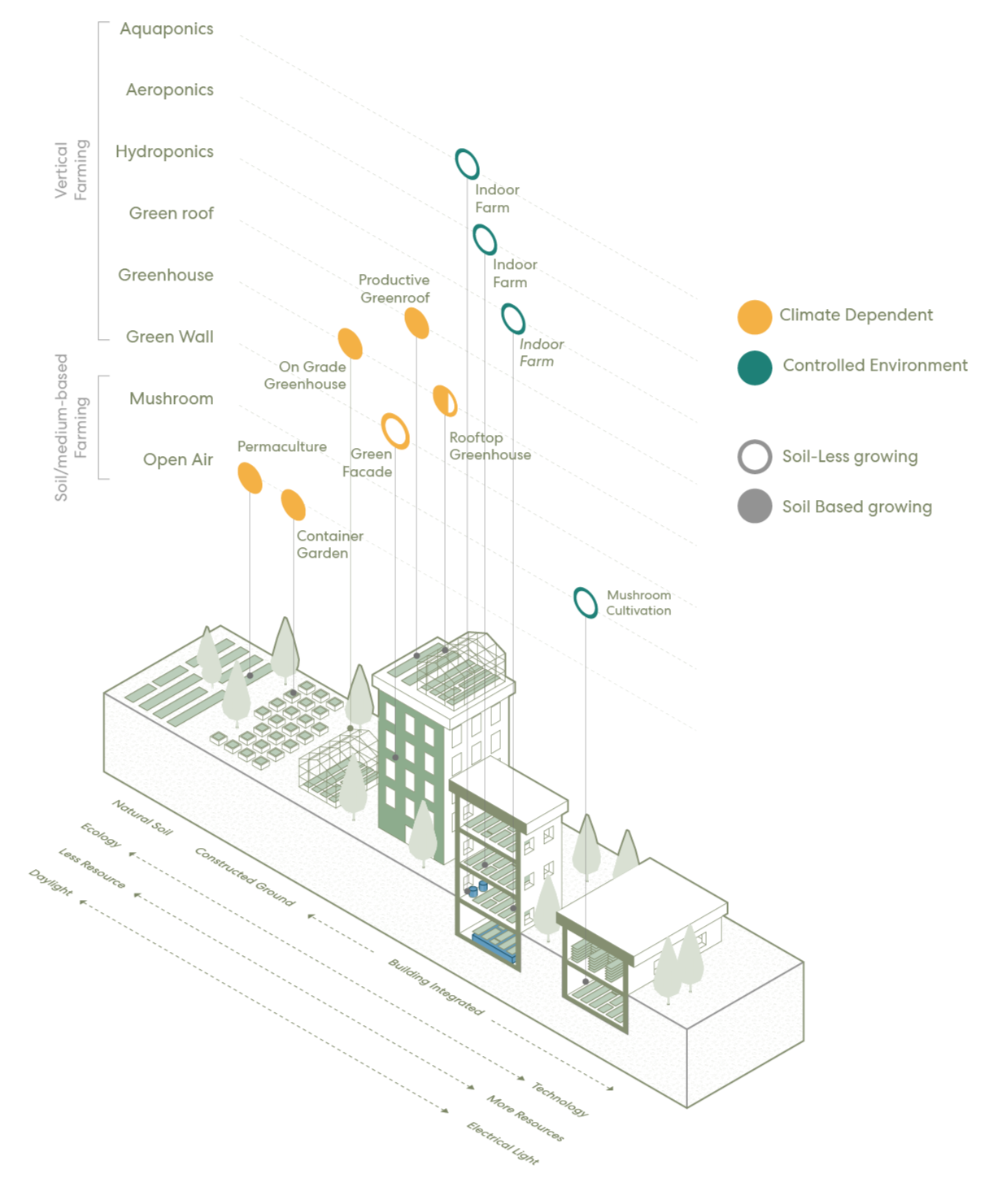
Urban agriculture taxonomy, mapping each system by controlled-environment vs. climate-dependent and soil-based vs. soil-less. Adapted from: Dorr et al., 2021; Benis et al., 2018; Gundula Proksch, 2017.