The Circular Waste-to-Resource System
A hypothetical building-farm system where waste heat, CO₂, greywater, and organic waste from an aerobic digester, composting bin, and stormwater cistern all route into farm inputs, closing loops most buildings currently leave open.
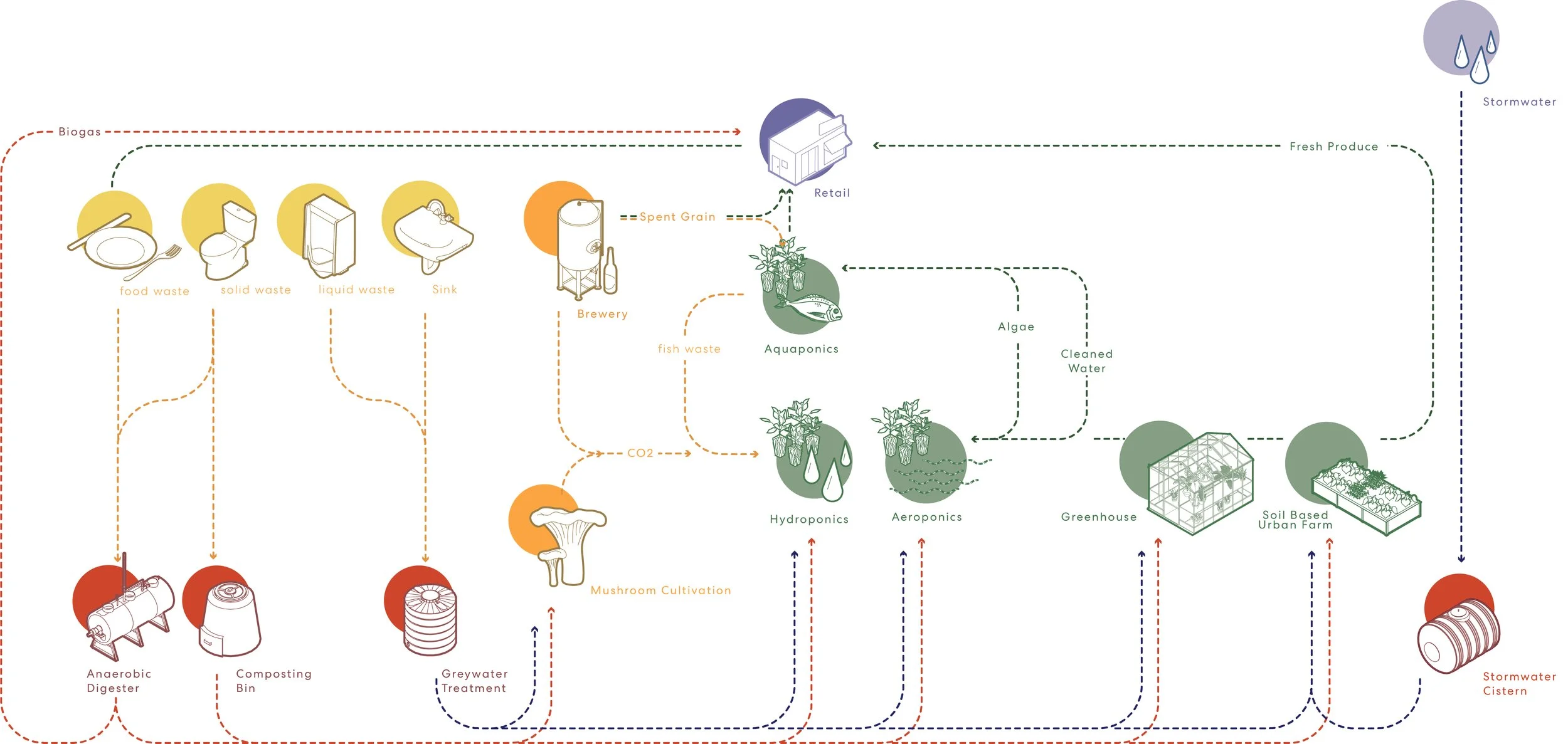
Hypothetical systems diagram with a circular waste-to-resource ecosystem
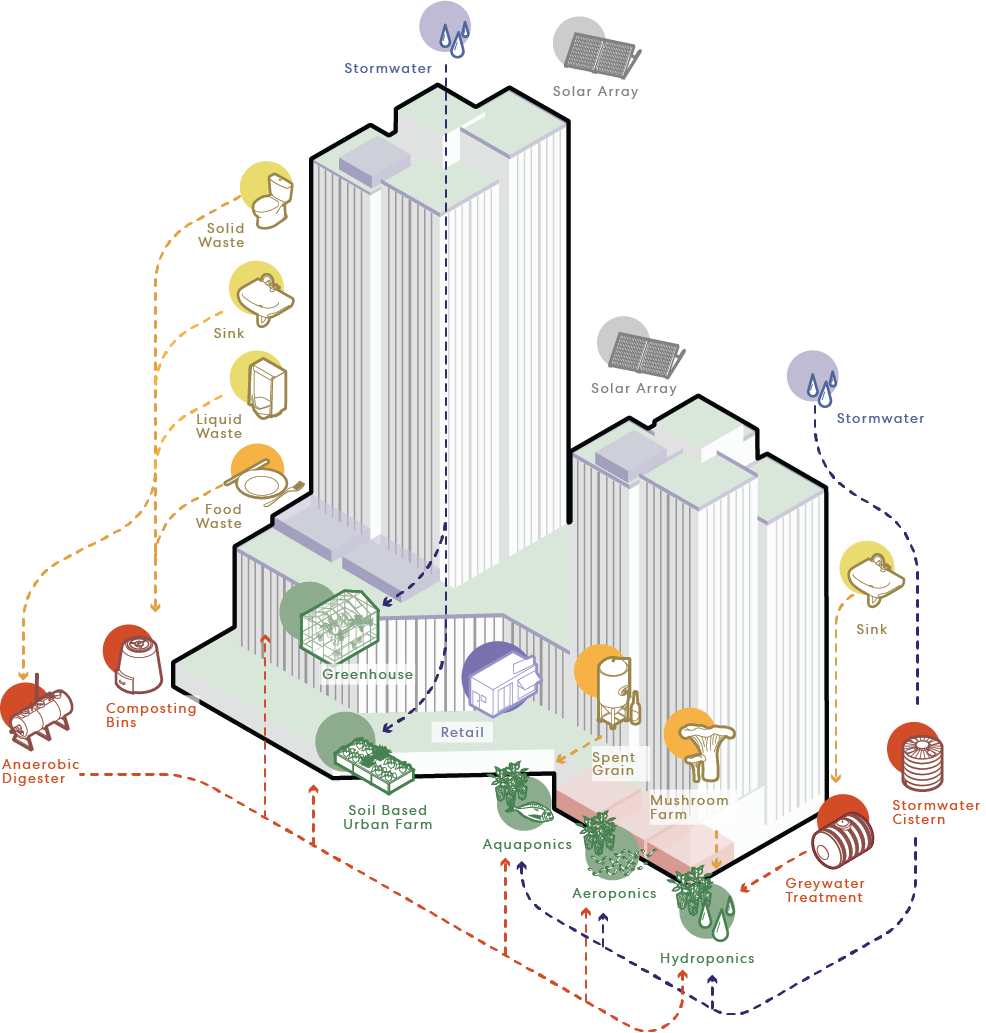
This diagram recurs across multiple chapters because it functions as the report's north star, the expression of what "circular" actually means at the scale of a single building.
An aerobic digester processes organic waste into usable inputs, a greywater treatment system reclaims water from sinks and showers for irrigation, and a stormwater cistern captures rainwater rather than sending it to the sewer, all feeding into a farm that in turn returns fresh food, cleaner air, and warm exhaust air back to the building. It's presented
That gap between the diagram and real project is intentional, it's meant to be read as a design target that individual case studies (like Bubbly Dynamics or Skeena Terrace) are shown approaching from different directions, not a claim that any one project has already arrived there.
From the Report:
Part V, "Resource Exchange & Recovery Systems."